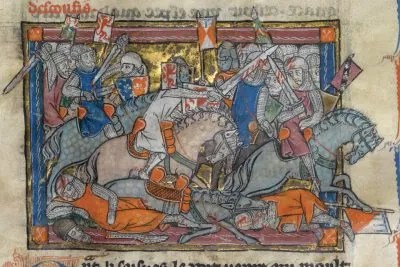
Between 1272 and 1327, during the reigns of Edward I and Edward II, most paid men-at-arms in English service had a surprising perk: warhorse insurance. Known as restaurum equorum, this benefit acted much like a modern horse insurance policy – if a soldier’s warhorse was injured, fell ill, or died while on campaign, he could claim compensation from the Crown.
But just like today, getting that payout involved quite a bit of paperwork, and also proof.
Before going to war, every insured warhorse was carefully inspected. Its description, colour, and value were recorded in official “horse rolls.” If the horse later died in battle or on the march, a senior official would check its description and value against the rolls before signing off on the payout.
Things got complicated, though, if the horse died far from camp, say during a chaotic skirmish or messy retreat. After all, dragging a dead horse back through enemy territory wasn’t exactly practical. So what did the men do? They brought back the next best thing: the horse’s ears and tail. These grisly tokens were enough to confirm a match with the rolls, and to prove that yes, the horse had indeed died.
One rare surviving certificate from 1303 shows this process in action. It was issued for a man named Oswald de Carlisle, a valet to Sir William de Ponton, after Oswald’s horse – a bay rouncey worth five marks – died during the Anglo-Scottish wars near Lochmaben Castle in southern Scotland.

Sir William’s formal declaration reads:
“To his most dear lord, he sends himself prepared for the good pleasure of his will. Lord, know that I have seen the ear and the tail of a certain bay rouncey ‘dead’, appraised at five marks at Lochmaben, on behalf of Oswald de Carlisle, valet of Sir William de Ponton. In testimony of which matter, I send these my letters patent to your lordship.”
Gruesome as it might seem, this letter is a rare survival of one of the few pieces of evidence showing how medieval soldiers claimed compensation for the loss of their most valuable assets, their warhorses. It’s a glimpse into the machinery of medieval military life and a reminder that even centuries ago, insurance claims could be a messy business.
 Dr Emma Herbert-Davies
Leave a comment