On 25 April 1304, Edward I of England – then in the midst of the siege of Stirling Castle – wrote the following letter to a trusted merchant associate:
“The King to his good friend Borgeys le frere Pute, merchant. We are pleased to know by his letter that he has received for us the horse which John de Sandale and the sheriffs of London delivered to him. We have commanded the Bishop of Chester the treasurer to take order with these sheriffs that the horse want for nothing. We command him to look after it well and keep it in good condition, and speedily inform us if he is suitable for us, what kind he is, his height, age, and colour, and if his teeth are worn or not.”
This is not merely an isolated administrative note, but a revealing glimpse into royal priorities. On the very day this letter was composed, Edward was directing the campaign against the last major Scottish stronghold at Stirling. The siege (famously dramatised in the opening scenes of the 2018 Netflix movie Outlaw King) was a defining moment in the Anglo-Scottish wars. Yet even amid the pressures of military command, the king’s attention turned to the details of his newly acquired horse.
The letter is striking for its specificity. Edward does not simply acknowledge receipt; he demands a full assessment: conformation (“what kind he is”), measurable attributes (“his height”), colour, and even dental condition. Such concerns reflect the king’s deep knowledge of horses. Teeth, for instance, are a recognised indicator of age. Height and type were critical in determining whether it was suitable for general riding or warfare.
By 1304, Edward was 65 years old and had spent decades on campaign and a lifetime in the saddle. His interest in this new horse, even during an active siege, underscores the centrality of the horse to medieval kingship. They were not merely transport or military assets – they were integral to royal identity, mobility, and authority.
But this brief document also reveals more than just a passing interest. My research on warhorses during the reign of Edward I of England demonstrated the extent of his personal investment in horses. He spent vast sums establishing and maintaining royal breeding centres, took an active role in decisions about how his horses were bred, reared, and trained, and – even in his final years – retained a genuine enthusiasm for the acquisition of a new mount.
To many, Edward I of England – the so-called “Hammer of the Scots” – remains a controversial figure; yet as a horseman, he was unparalleled.
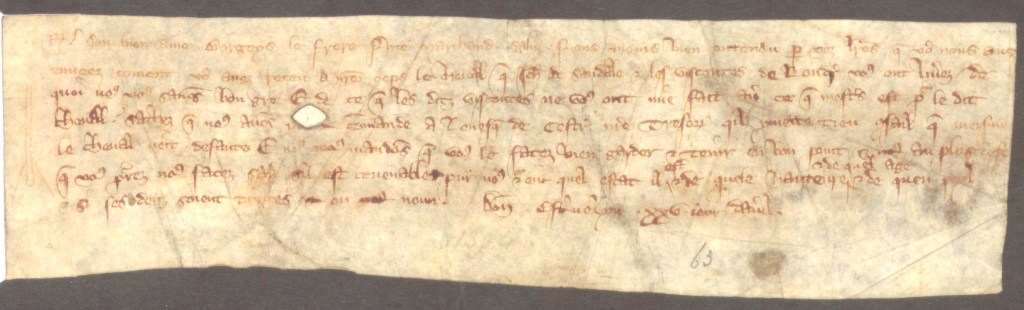
Image: The National Archives, C47 22 3 70
 Dr Emma Herbert-Davies
Leave a comment