The Warhorse in England: 1272-1327

The Warhorse in England: 1272–1327 examines the central role of the warhorse under Edward I and Edward II, using primary sources to explore its breeding, training, deployment, and care. Moving beyond symbolism, it highlights the practical demands of sustaining warhorse populations and offers new insights into medieval warfare and human–animal relations.
The Horse in History: Festschrift in Honour of John Clark
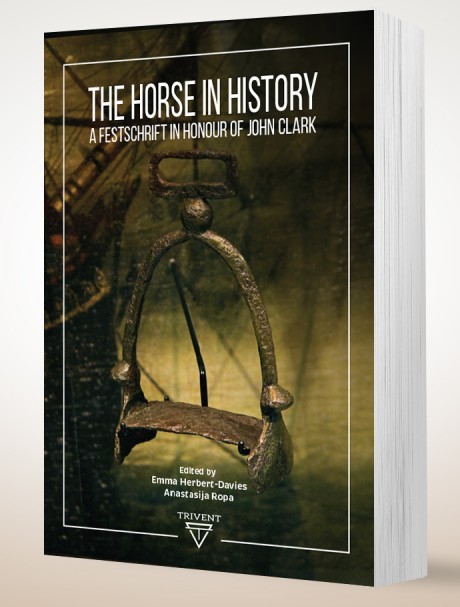
John Clark’s pioneering work in medieval equestrian history has profoundly shaped the field. This Festschrift brings together international scholars to honour his legacy, offering new perspectives on the horse’s practical, cultural, and symbolic roles from Roman Britain to the Elizabethan court.
Evaluation of Mail Horse-Armour by David Jones & Emma Herbert-Davies
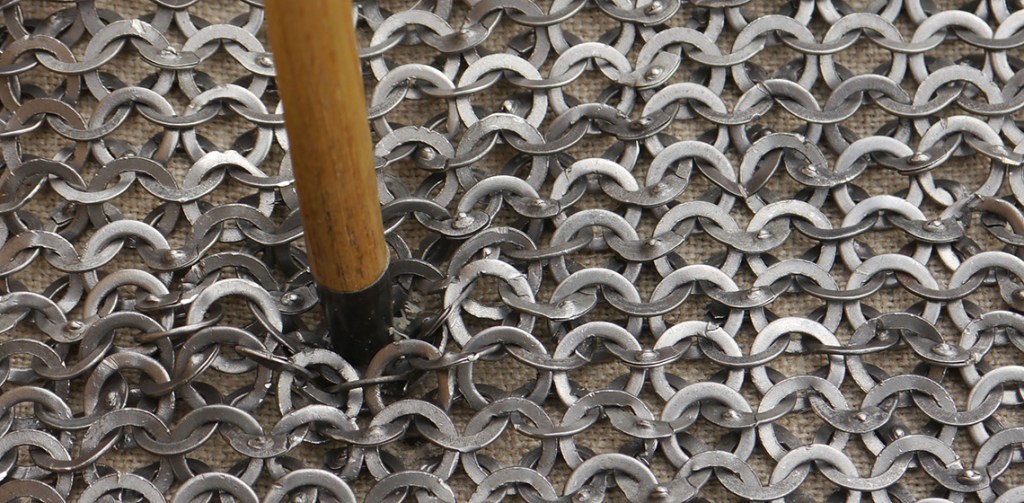
This study was undertaken to gain an understanding of the effectiveness of mail armour in protecting horses against arrow shot, and to assess the circumstances in which such armour might play a useful role. Experimental tests were conducted by shooting arrows with reproduction medieval bodkin points at reproduction mail over various thicknesses of woven linen fabric.
CHAPTER 4: Appraising the Warhorse: Restaurum Equorum in the Reigns of Edward I and II
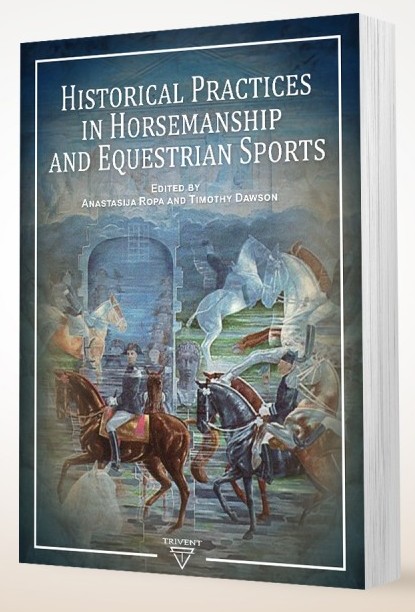
During the reigns of the three Edwards (1272-1377) paid men-at-arms were offered the benefit of horse restoration, or restaurum equorum. This meant that if their horse was lost on campaign they could claim financial compensation. To facilitate this, horses were formally appraised at the start of military service and the details were entered into an official inventory. This study considers who was appraising horses, how evaluations were made, and what qualified a horse as suitable for warfare.
Forthcoming Publications
On the Medicine of Horses
De Medicina Equorum (On the Medicine of Horses) by Jordanus Ruffus of Calabria is a foundational medieval treatise on horse care and the treatment of equine diseases. Drawing on his experience as a stablemaster at the court of the Holy Roman Emperor Frederick II, Jordanus Ruffus combines practical guidance, clinical observation, and theoretical knowledge to provide a comprehensive account of equine management and health in the thirteenth century. This edition, based on Heironymous Molin’s Latin transcription, presents the treatise in its first complete English translation, making an influential medieval text accessible to modern readers for the first time.
Horseshoes: A Pocket Guide for Finds & Fieldwork
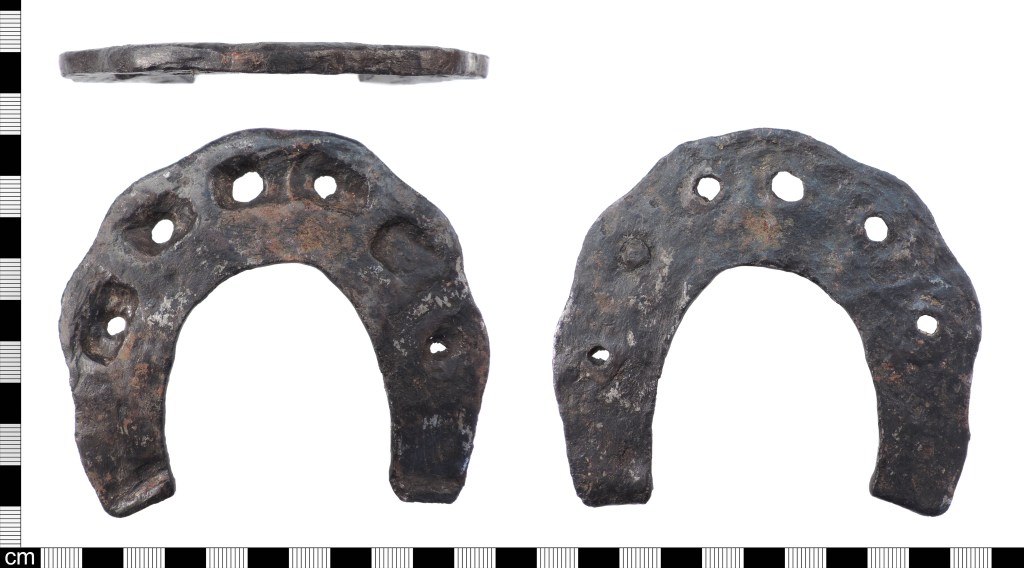
A pocket guide to identifying & dating horseshoes. For archaeologists, metal detectorists, finds officers, and the general public. Coming soon on Amazon.
Image courtesy of The Portable Antiquities Scheme.
 Dr Emma Herbert-Davies